

New Year, New Priorities: Retaining Your Best Tech Talent in 2026
As the new year looms, tech managers often reflect on priorities and goals for the year ahead. One question that should top their list is: “How do I keep my teams motivated and engaged?”
Retaining top tech talent isn’t just an HR concern — it’s a critical business imperative. Turnover isn’t just disruptive — it’s expensive. According to the Society for Human Resource Management (SHRM), replacing a single employee can cost six to nine months of their salary when you factor in recruiting, onboarding, training, and lost productivity.
When your best engineers or developers leave, it isn’t just a vacancy; it can slow innovation, delay project delivery, and disrupt operational stability.
As Mahatma Gandhi once said,
“I suppose leadership at one time meant muscles, but today it means getting along with people.”
This couldn’t be more true for tech leadership: keeping top performers isn’t about authority — it’s about how leaders connect with, support, and inspire their teams.
A recent TechHeads LinkedIn poll highlights the urgency: retention is the number one challenge facing technology teams today. Losing top performers isn’t just about people — it’s about continuity and maintaining a competitive edge.
In Ireland and globally, turnover in technology roles is rising, driven by factors such as work-life balance, career growth, and flexible working arrangements. Reports from Microsoft’s Work Trend Index and LinkedIn workforce studies highlight how employees increasingly value supportive management, meaningful work, and flexibility when deciding whether to stay or move jobs.
Given this landscape, retention is clearly more than a “nice-to-have” — it’s a leadership responsibility. Here’s what we have learned about keeping your top tech performers engaged, developing, and invested in your team.
Challenge, Growth, and Future-Ready Skills
Tech professionals often thrive on curiosity, problem-solving, and learning. Monotonous tasks or stagnant roles quickly push them to explore opportunities elsewhere. Research shows that offering challenging work, skill development, and growth opportunities is critical for retention.
Google’s “20% time” policy — where engineers can dedicate a portion of their week to self-directed projects — has long been credited with fostering innovation and engagement. Microsoft similarly encourages a “growth mindset,” giving employees opportunities to tackle new challenges as part of their day-to-day work.
Closer to home, Dublin-founded Tines demonstrates how Irish companies can lead in this area. Recognised among Ireland’s top startups on LinkedIn, Tines invests in career development and internal mobility, showing employees a path for growth while keeping them engaged.
Culture, Inclusion, and Flexibility
Even exciting work cannot compensate for a toxic culture or poor management. People often leave managers and environments, not companies. Studies show that workplaces with inclusive practices, strong culture, and flexible work arrangements retain employees far more effectively.
While companies like BrewDog have faced challenges due to reports of toxic culture leading to staff departures, others show the positive impact of culture and flexibility. Irish companies like Xtremepush have been recognised for inclusive practices, flexible work models, and learning investment, creating environments where employees feel valued and motivated.
Compensation, Ownership, and Transparency
Compensation matters, but it is not enough on its own. Top performers want clarity on progression, meaningful ownership of work, and understanding of their long-term value to the organisation. Companies such as Global Shares in Cork combine transparent policies, equity participation, and clear progression paths to give employees both immediate and future impact. Globally, firms like Nvidia, AMD, and Broadcom use multi-year equity packages to link rewards to retention, demonstrating that employees stay when they understand their full value and contribution.
Proactive Retention is a Leadership Responsibility
Leading organisations don’t wait for employees to quit — they anticipate risk and act early. Proactive strategies include stay interviews, pulse surveys, and tailored development plans. Evidence shows that companies using proactive retention approaches build more resilient, engaged, and future-ready teams.
Retention is a Leadership Priority
Retention isn’t down to chance or just an HR task — it’s a leadership issue. Leaders keep people engaged by supporting their development, recognising their efforts, and giving them the environment to do their best work. Companies that focus on:
- Meaningful, growth-oriented work
- An inclusive and flexible culture
- Transparent career progression and ownership
- Proactive, data-driven retention strategies
don’t just hold onto talent — they unlock its full potential.
As you plan for the year ahead, ask your leadership team: What’s really keeping your people engaged — growth, culture, or transparency? And what could take them to their full potential in 2026?
If you have enjoyed this article please share it.
Related Posts

Irish Automotive Summit 2026: Big Ideas, Micro Talks, and a Fast-Moving Industry
Irish Automotive Summit 2026: Big Ideas, Micro Talks, and a Fast-Moving Industry On April [...]

Ireland’s Recruitment Story in 2026: A Year of Steady Growth and New Hiring Journeys
Ireland’s Recruitment Story in 2026: A Year of Steady Growth and New Hiring Journeys The [...]

Emerging Tech Trends for 2026: Insights for Tech Professionals
Future-Proof Talent: The Tech Trends Shaping 2026 At TechHeads, we don’t just track tech [...]

New Year, New Priorities: Retaining Your Best Tech Talent in 2026
New Year, New Priorities: Retaining Your Best Tech Talent in 2026 As the new year looms, tech [...]

From 2025 to 2026: TechHeads’ Year in Review and What’s Next
TechHeads Year in Review As 2025 draws to a close, we’re taking a [...]

Modernising Legacy Systems with Project-Based Resourcing
Modernising Legacy Systems with Project-Based Resourcing Some systems in every business quietly run day [...]
Insights from the LEO Clare Christmas Networking Event
Insights from the LEO Clare Christmas Networking Event TechHeads were delighted to attend the Local Enterprise Office Clare [...]

NAERSA Established to Manage MyFutureFund
NAERSA Established to Manage MyFutureFund The rollout of Ireland’s auto-enrolment pension scheme is moving [...]
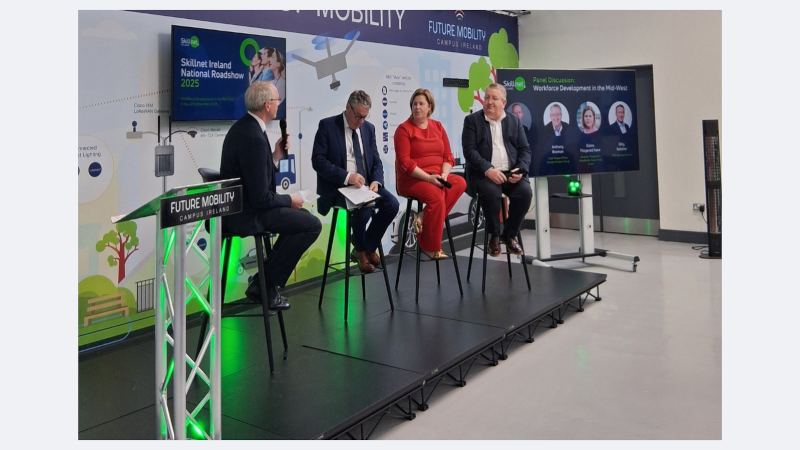
TechHeads at Skillnet Ireland’s Roadshow: Driving Innovation, AI, and Green Skills
TechHeads at Skillnet Ireland’s Roadshow: Driving Innovation, AI, and Green Skills On 21st November 2025, [...]

HR Guide to Ireland’s Auto-Enrolment Pension Scheme
HR Guide to Ireland’s Auto-Enrolment Pension Scheme “Retirement: It’s nice to get out of the [...]

How the EU Pay Transparency Directive Impacts the Tech Sector
How the EU Pay Transparency Directive Impacts the Tech Sector The EU Pay Transparency Directive [...]

Use AI in Your Job Search Without Feeling Robotic
Use AI in Your Job Search Without Feeling Robotic As a tech recruitment team, we’re [...]
Tech & IT Hiring Trends in Ireland 2025
Tech & Hiring Trends in Ireland 2025 Ireland’s tech and IT job market continues to [...]

Remote and Hybrid Jobs in Ireland: What Candidates Need to Know
Remote and Hybrid Jobs in Ireland: What Candidates Need to Know Flexible working isn’t just [...]

Top 5 Mistakes Tech Job Seekers Make
Top 5 Mistakes Tech Job Seekers Make You’re talented, experienced, and great at what [...]

Budget 2026: Implications for Ireland’s Tech Industry
Budget 2026: Implications for Ireland’s Tech Industry Budget 2026 is setting the stage for Ireland’s [...]