

Irish Automotive Summit 2026: Big Ideas, Micro Talks, and a Fast-Moving Industry
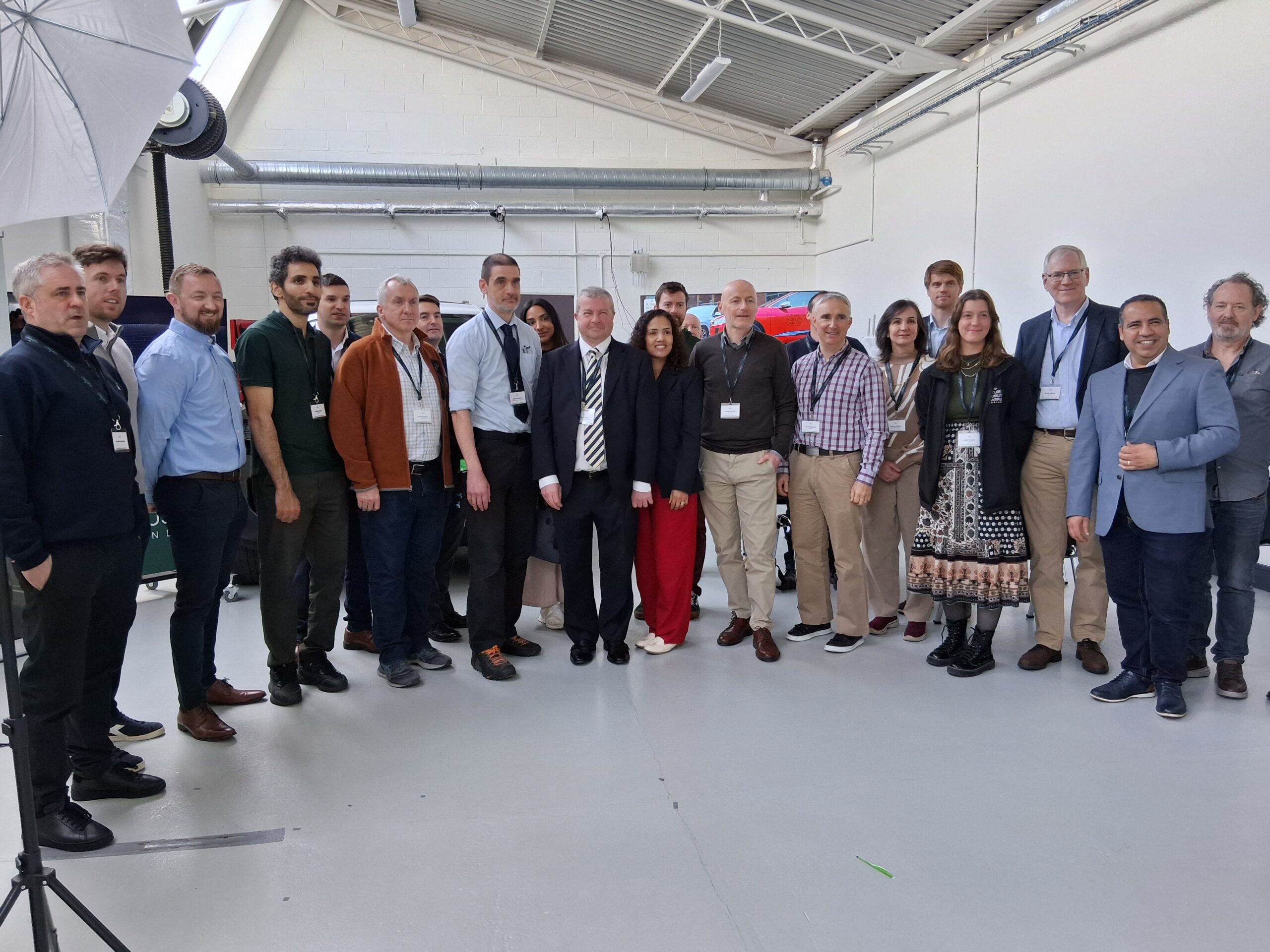
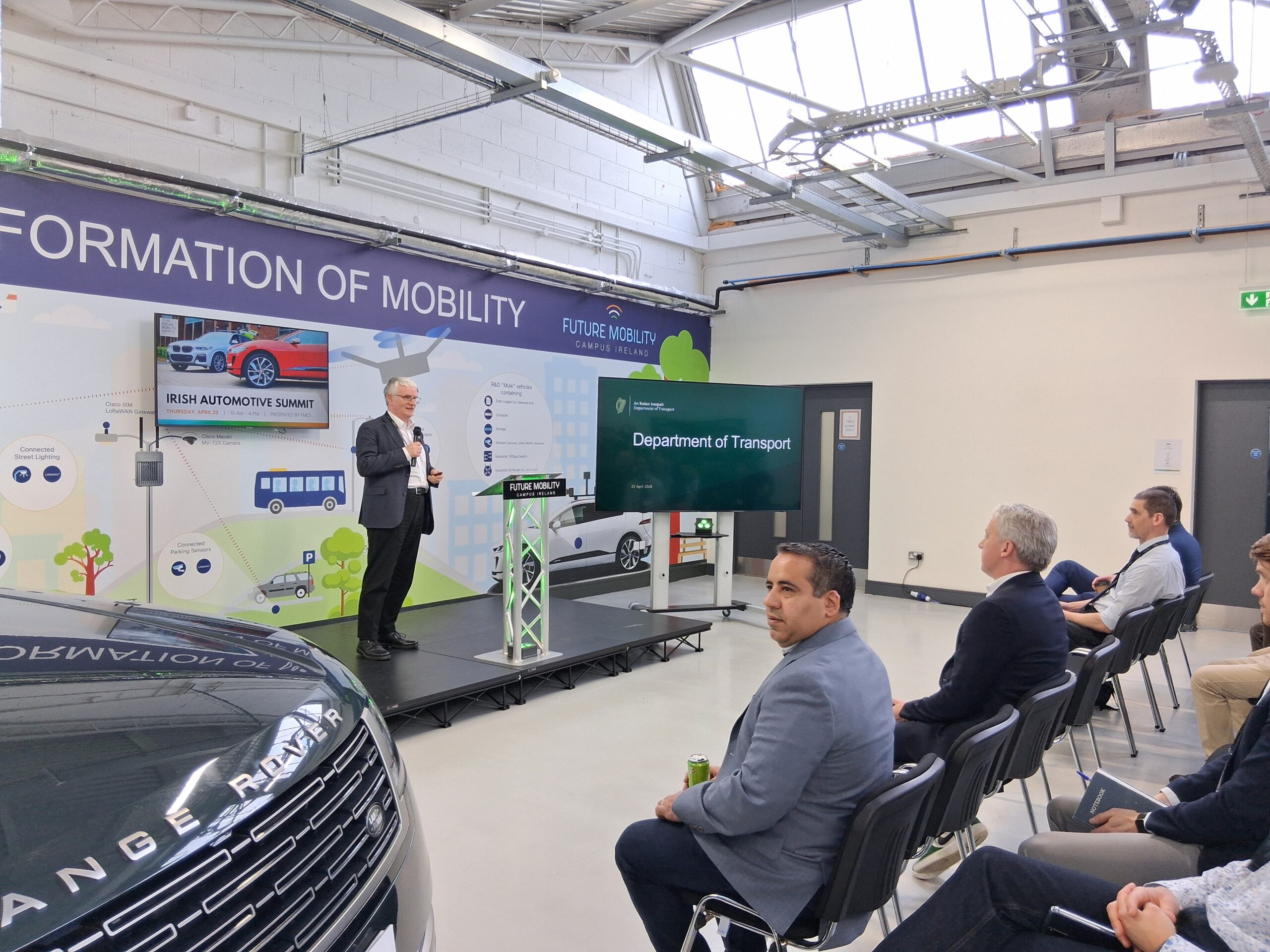
On April 23, Future Mobility Campus Ireland in Shannon became a hive of activity as the Irish Automotive Summit 2026 welcomed companies and innovators from every corner of Ireland’s automotive world. The energy was unmistakable, seasoned industry leaders, and ambitious startups, all gathered under one roof, eager to share ideas and imagine where the road might lead next.
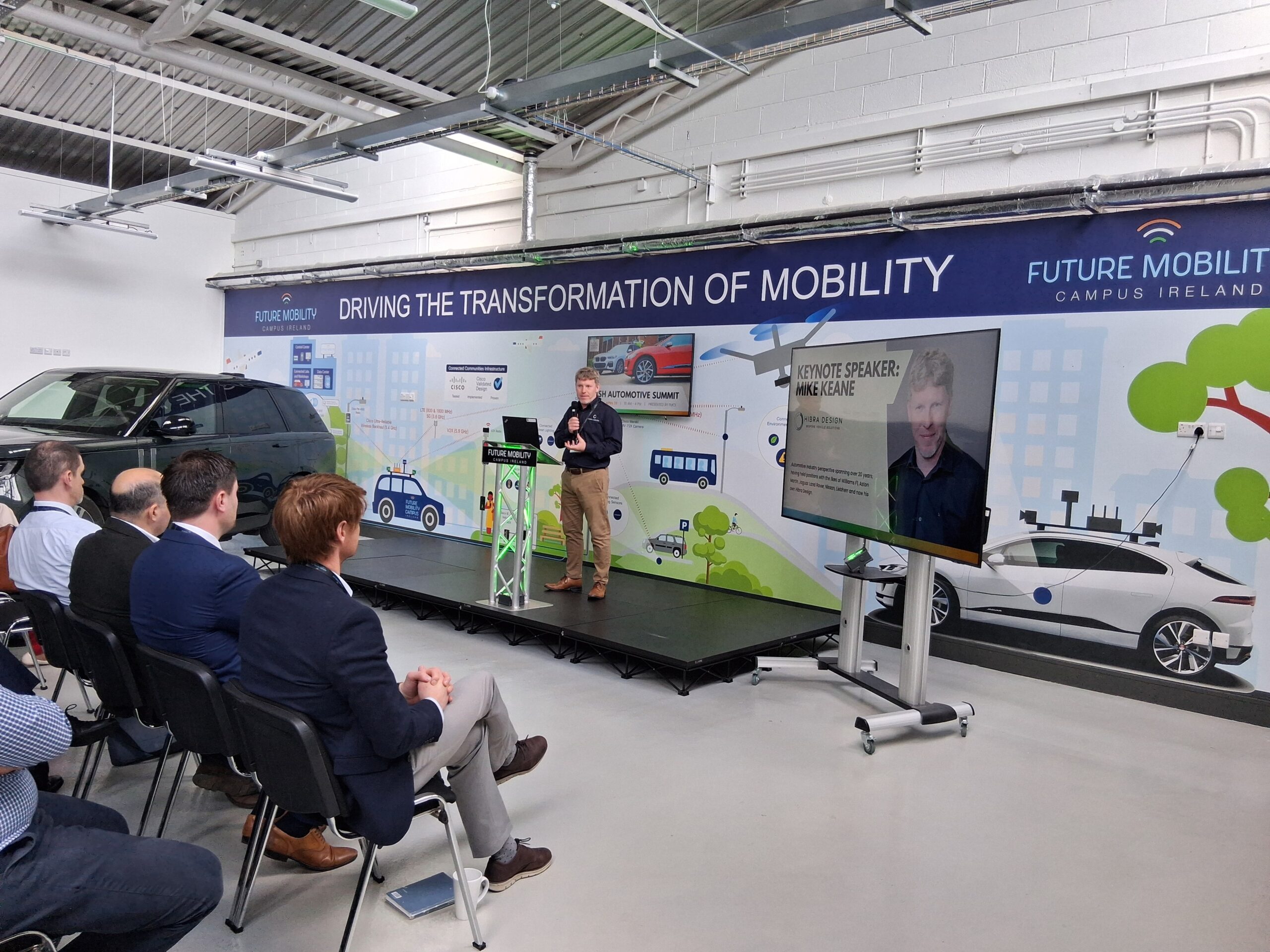
A Personal Start: Mike Keane’s Keynote
He also touched on Ireland’s place in automotive history, sharing a couple of surprising facts. Mary Ward, an Irish scientist, is believed to have been the first person killed in a motor vehicle accident back in 1869, and Bridget Driscoll, who was originally from Ireland, became the first pedestrian killed by a car in London in 1896. Not exactly the kind of records you’d want to hold—clearly the luck of the Irish wasn’t at play there.
Ireland’s Automotive Past
From there, Mike moved into Ireland’s own automotive past. It’s easy to forget now, but from the 1950s through to the early 1980s, Ireland had a fairly active vehicle assembly industry. Brands like Renault, Fiat, and Volkswagen all had operations here, with cars being assembled in places like Dublin (particularly around the Naas Road), Cork, and Limerick. That all wound down by the mid-1980s, driven by changing economics, increased competition, and Ireland’s closer integration with the European market, which made local assembly less viable.
Mike’s career path followed some of those same industry shifts. He spent time working in Coventry in the UK, once a powerhouse of car manufacturing. He saw first-hand how economic pressures can reshape an industry.
The Shift to a Software-Defined Future
Naturally, the conversation then turned to where things are going next. Electrification was a major theme, but not just in terms of swapping petrol for batteries. Mike spoke about how electric vehicles are driving a much bigger shift towards software-led design, connected systems, and increasingly autonomous capabilities. The car is no longer just a machine—it’s becoming a fully integrated tech platform.
Encouragingly, Ireland is starting to carve out a place in that future. Universities and technical institutes are stepping up, offering more specialised programmes focused on next-generation automotive technologies. Mike highlighted Technological University of the Shannon (TUS) just down the road from us in Coonagh, Limerick, as one example of how education is evolving to meet industry demand.
From Talks to Live Demonstrations
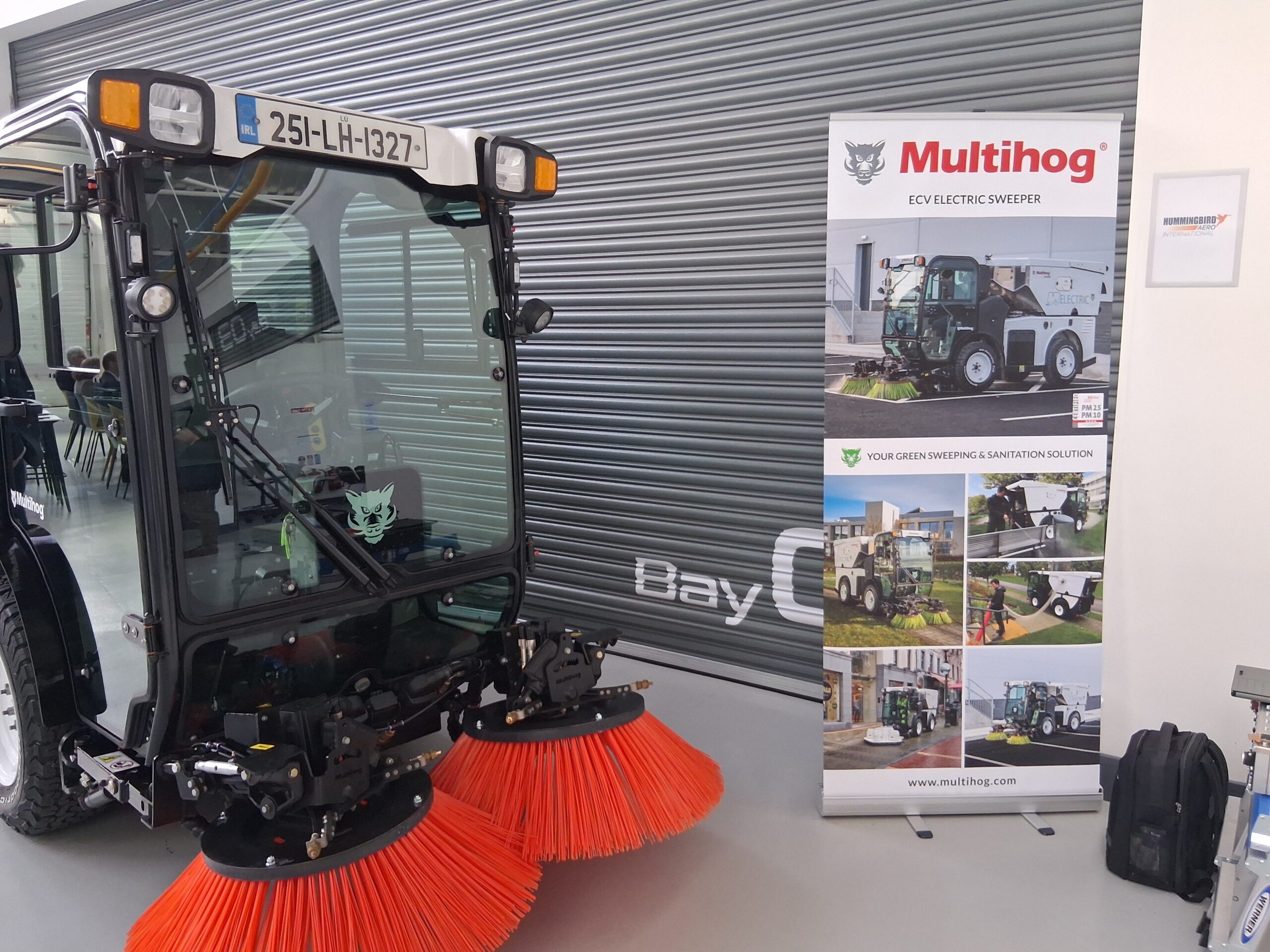
The day then moved into a series of talks and live demonstrations across the different bays around the campus, which gave things a more hands-on feel and a chance to see some of the technology in action.
Brian Carroll from Endeavour opened this session with a talk on connectivity, focusing on the growing importance of reliable, always-on communication in modern vehicles.
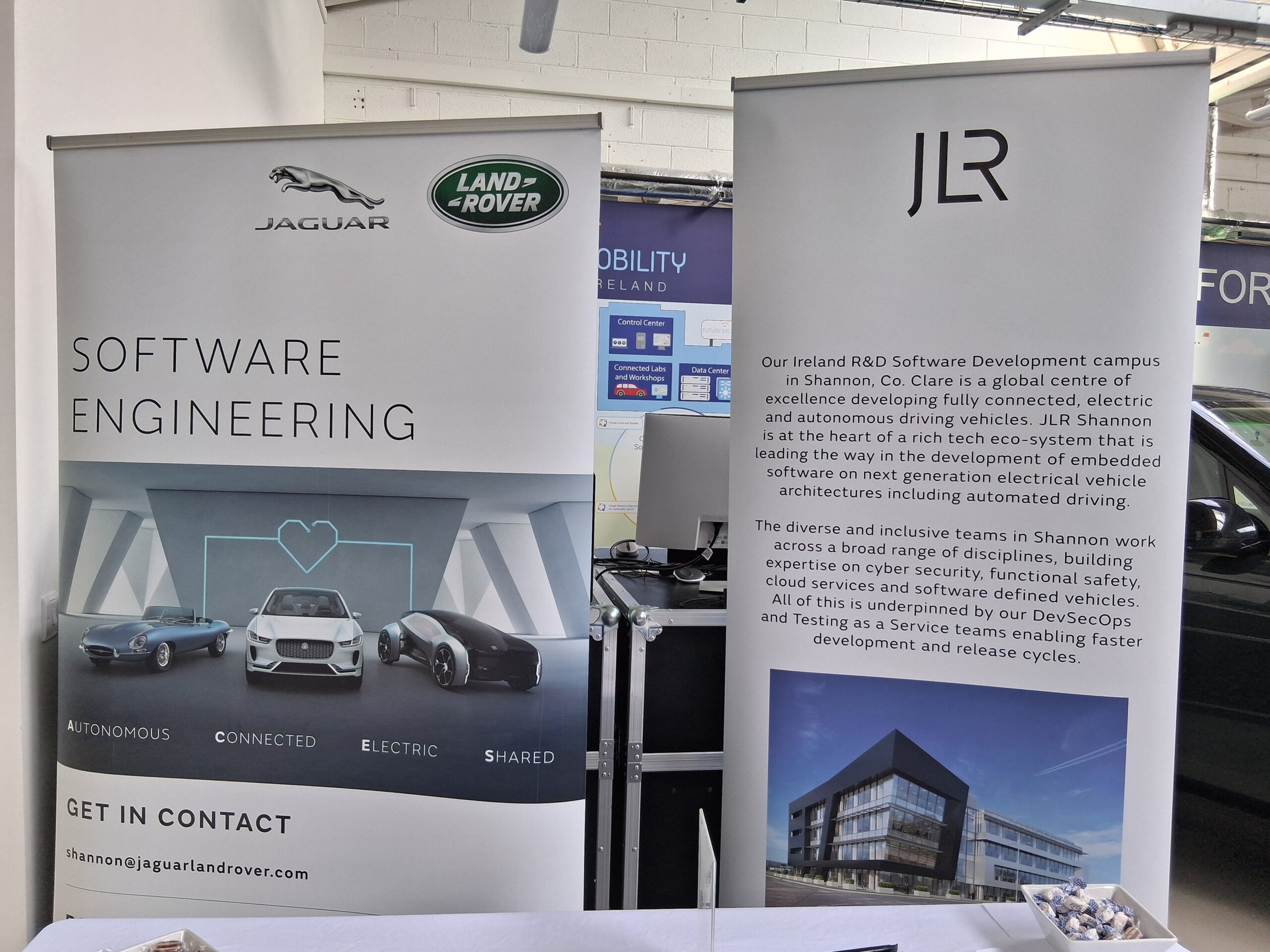
Paul Girr, representing Jaguar Land Rover (JLR), shared an interesting perspective on how the company operates globally. He described Ireland as a hub for innovation, while India plays a key role in scaling those innovations.
Hyperpath followed with a focus on resilient connectivity, combining multiple unreliable networks into a single stable connection—critical for modern vehicle performance.
Innovation on Display
In Bay 1, there was a strong emphasis on semiconductor and systems-level innovation. Analog Devices, a long-established presence in Limerick, spoke about developments in Ethernet edge bus technologies, wireless battery systems, and gigabit connectivity.
Synopsys were also present, highlighting the growing importance of chip design and simulation in an increasingly software-defined automotive world.
Alps Alpine focused on supply chain integration, while Brakebetter, an automotive engineering consultancy, spoke about their global reach, working with clients across four continents.
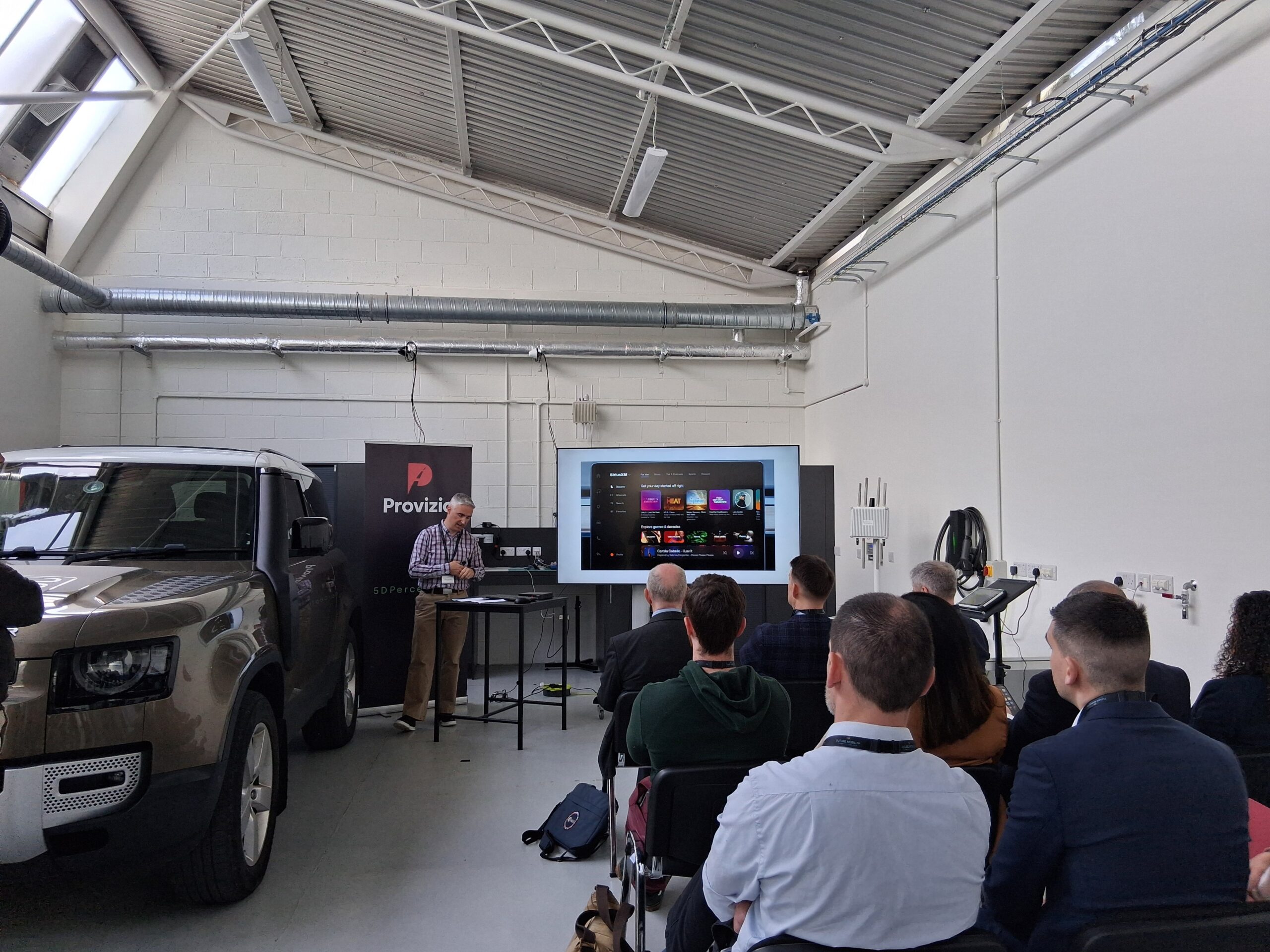
SiriusXM, has only been in Ireland for around 18 months, spoke about its rapid growth and the support they’ve received from the IDA. They recently won Best Early Stage Investment 2026, and their momentum is clear. With a Dublin base and a team spanning senior engineers, data scientists, and R&D specialists, they’re using AI to improve software delivery and overall system performance.
Engineering in Action
Connections and Conversations
Finally
Overall, the summit highlighted not just how much the automotive industry is changing, but how actively Ireland is participating in that change. From education and research to startups and global players, there’s a clear sense that the foundations are being laid for something significant.
From a TechHeads perspective, it’s an exciting space to watch—and even more interesting to be part of.
A big thank you to the Future Mobility Campus team for the invitation, and for all the work behind the scenes that made the day run so smoothly.
If you have enjoyed this article please share it.
Related Posts

Irish Automotive Summit 2026: Big Ideas, Micro Talks, and a Fast-Moving Industry
Irish Automotive Summit 2026: Big Ideas, Micro Talks, and a Fast-Moving Industry On April [...]

Ireland’s Recruitment Story in 2026: A Year of Steady Growth and New Hiring Journeys
Ireland’s Recruitment Story in 2026: A Year of Steady Growth and New Hiring Journeys The [...]
Emerging Tech Trends for 2026: Insights for Tech Professionals
Future-Proof Talent: The Tech Trends Shaping 2026 At TechHeads, we don’t just track tech [...]

New Year, New Priorities: Retaining Your Best Tech Talent in 2026
New Year, New Priorities: Retaining Your Best Tech Talent in 2026 As the new year looms, tech [...]

From 2025 to 2026: TechHeads’ Year in Review and What’s Next
TechHeads Year in Review As 2025 draws to a close, we’re taking a [...]

Modernising Legacy Systems with Project-Based Resourcing
Modernising Legacy Systems with Project-Based Resourcing Some systems in every business quietly run day [...]
Insights from the LEO Clare Christmas Networking Event
Insights from the LEO Clare Christmas Networking Event TechHeads were delighted to attend the Local Enterprise Office Clare [...]

NAERSA Established to Manage MyFutureFund
NAERSA Established to Manage MyFutureFund The rollout of Ireland’s auto-enrolment pension scheme is moving [...]
TechHeads at Skillnet Ireland’s Roadshow: Driving Innovation, AI, and Green Skills
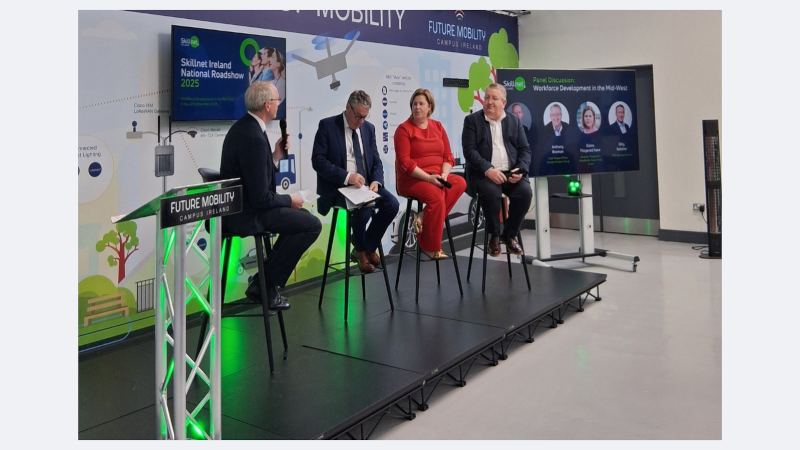
TechHeads at Skillnet Ireland’s Roadshow: Driving Innovation, AI, and Green Skills On 21st November 2025, [...]

HR Guide to Ireland’s Auto-Enrolment Pension Scheme
HR Guide to Ireland’s Auto-Enrolment Pension Scheme “Retirement: It’s nice to get out of the [...]

How the EU Pay Transparency Directive Impacts the Tech Sector
How the EU Pay Transparency Directive Impacts the Tech Sector The EU Pay Transparency Directive [...]

Use AI in Your Job Search Without Feeling Robotic
Use AI in Your Job Search Without Feeling Robotic As a tech recruitment team, we’re [...]

Tech & IT Hiring Trends in Ireland 2025
Tech & Hiring Trends in Ireland 2025 Ireland’s tech and IT job market continues to [...]

Remote and Hybrid Jobs in Ireland: What Candidates Need to Know
Remote and Hybrid Jobs in Ireland: What Candidates Need to Know Flexible working isn’t just [...]

Top 5 Mistakes Tech Job Seekers Make
Top 5 Mistakes Tech Job Seekers Make You’re talented, experienced, and great at what [...]

Budget 2026: Implications for Ireland’s Tech Industry
Budget 2026: Implications for Ireland’s Tech Industry Budget 2026 is setting the stage for Ireland’s [...]