

AI isn’t Killing Tech Jobs; it’s raising the bar.
At the same time that Coinbase is making headlines for potential AI-driven job cuts, many people in Ireland are understandably wondering what that could mean for local tech jobs. Coinbase employs staff in Dublin, and its decision to cut roughly 14% of its workforce as part of an “AI-native” restructuring has added to fears that artificial intelligence could trigger a much broader wave of job losses across the industry.
But at the very same time, Kraken, another major crypto exchange operating in the same space, is hiring aggressively and encouraging employees to integrate AI tools into their daily work.
Two companies in the same sector. Two completely different responses to the same technology shift.
And that probably says more about where the industry really is than any dramatic headline does.
AI is not pushing every company in one clear direction. Some firms are using it to cut costs and reduce headcount. Others are using it to increase productivity, move faster, and expand.
That is why the conversation around AI and jobs often feels too black and white. The reality is more subtle.
The Irish Market
There is genuine anxiety around AI and employment, especially as stories about layoffs continue to dominate the news cycle. But the Irish market does not fully support the idea that AI is simply wiping out jobs overnight.
Recent research from Indeed found that one in ten job postings in Ireland now reference AI in some form, with software development roles among the highest categories. At the same time, Irish job postings overall remain above pre-pandemic levels.
The expectation appears to be shifting rather than collapsing.
Jack Kennedy, senior economist at Indeed, recently noted:
For jobseekers, AI is rapidly reshaping how work gets done, with a clear expectation emerging for workers across all sectors to be comfortable using AI tools, even in roles that aren’t traditionally tech-focused.
That feels much closer to what is actually happening across the market. The pressure may be less about outright replacement and more about adaptation.
The same theme appears elsewhere in the Irish tech sector. According to a recent LinkedIn article from recruitment firm Fruition Group Ireland, the Irish tech hiring market continues to show resilience, with strong demand across AI/ML, cybersecurity, cloud engineering, and data-focused roles despite wider concerns around layoffs and automation.
We are seeing a similar pattern ourselves at TechHeads. Yes, there is concern around AI and job displacement, and understandably so. But companies are still hiring, particularly for candidates who are comfortable working alongside AI tools and adapting to more AI-assisted workflows.
The Rise of the AI-Native Professional
The contrast between Coinbase and Kraken is not really a contradiction. If anything, it is a sign of where the market is heading.
Some companies are using AI primarily to reduce costs. Others are using it to increase output and create leverage within teams.
In both cases, AI is quickly becoming part of the baseline.
But there is also an important distinction emerging between simply using AI and using it well.
And this is not just a conversation for developers. Product managers, designers, analysts, marketers, recruiters, and operations teams are all beginning to integrate AI into their workflows in different way
Using AI Isn’t Enough; Understanding It Matters
One point that often gets overlooked in all of this is that using AI is not the same thing as understanding it.
There is a huge difference between copying AI-generated output and being able to properly evaluate, question, and refine it.
AI can produce work that looks polished and convincing while still containing subtle issues such as missed edge cases, weak logic, poor architecture decisions, or security vulnerabilities. If those issues go unchecked, the speed advantage quickly turns into technical debt.
That is why human judgement still matters so much.
AI is not removing the need for skilled workers. In many cases, it is simply changing what is expected from them.
The real divide is not between people who use AI and people who do not. It is between people who can critically assess AI output and those who accept it at face value.
That is where some of the real risk is beginning to emerge.
Human Oversight Still Matters
AI systems can generate huge amounts of work, but they do not carry accountability.
Outputs still need to be reviewed, challenged, tested, and aligned with real-world constraints. Human involvement is not a backup plan. It remains central to making sure the work is reliable.
The challenge is that not every organisation is approaching AI with that mindset.
In some environments, AI-generated output is being trusted far too quickly. That is where the “ticking time bomb” concern starts to become very real. Faster output means very little if nobody fully understands what is being shipped underneath.
This is also why the idea of widespread job replacement does not fully line up with what we are seeing in practice. The reality is far more uneven. Some roles are being reduced, some are evolving rapidly, and others are becoming even more valuable.
A Different Way to Look at It
This is not the first time the tech industry has gone through a major tooling shift.
Higher-level programming languages, frameworks, cloud infrastructure, and automation all changed how work was done. AI feels bigger because it is happening faster and more publicly, but the broader pattern is familiar.
Some tasks fade away. Expectations rise. Roles evolve.
What feels different now is the unevenness of the transition. Job cuts in one part of the industry are happening at the same time as aggressive hiring in another. Some companies are embracing AI carefully and strategically, while others appear to be rushing toward automation without fully thinking through the long-term consequences.
Conclusion
AI is going to reshape the tech industry. That much is clear.
But the idea that it will simply wipe out huge numbers of jobs may miss the bigger picture. What seems more likely is a messy transition where some roles shrink, others evolve, and new opportunities emerge for people willing to adapt and learn alongside the technology.
At the same time, there is also a real warning buried inside all of this enthusiasm. AI output on its own is not enough. The ability to understand it, challenge it, and take responsibility for it still matters enormously.
That may not be as dramatic as the usual doom-and-gloom headlines, but it is probably closer to the truth.
At TechHeads, our advice is simple: don’t fear AI, learn to work with it, because the people who understand and use it well will be best placed for what comes next.
If you have enjoyed this article please share it.
Related Posts
AI Isn’t Killing Tech Jobs—It’s Raising the Bar
AI isn’t Killing Tech Jobs; it's raising the bar. At the same time that [...]
Irish Automotive Summit 2026: Big Ideas, Micro Talks, and a Fast-Moving Industry
Irish Automotive Summit 2026: Big Ideas, Micro Talks, and a Fast-Moving Industry On April [...]
Ireland’s Recruitment Story in 2026: A Year of Steady Growth and New Hiring Journeys
Ireland’s Recruitment Story in 2026: A Year of Steady Growth and New Hiring Journeys The [...]
Emerging Tech Trends for 2026: Insights for Tech Professionals
Future-Proof Talent: The Tech Trends Shaping 2026 At TechHeads, we don’t just track tech [...]
New Year, New Priorities: Retaining Your Best Tech Talent in 2026
New Year, New Priorities: Retaining Your Best Tech Talent in 2026 As the new year looms, tech [...]

From 2025 to 2026: TechHeads’ Year in Review and What’s Next
TechHeads Year in Review As 2025 draws to a close, we’re taking a [...]
Modernising Legacy Systems with Project-Based Resourcing
Modernising Legacy Systems with Project-Based Resourcing Some systems in every business quietly run day [...]
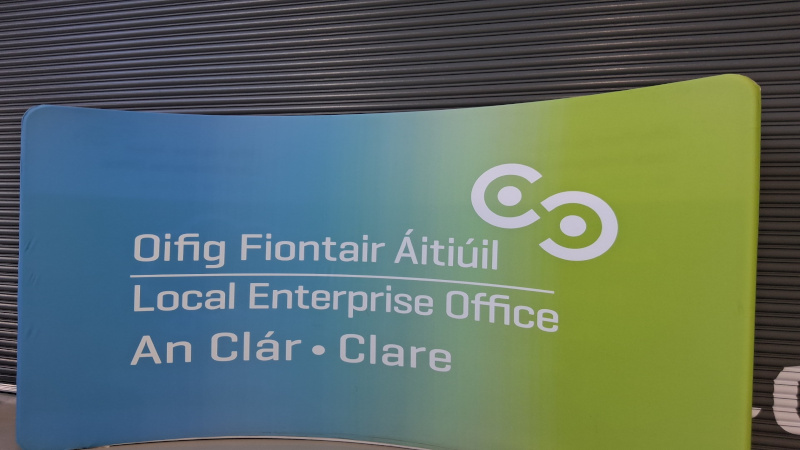
Insights from the LEO Clare Christmas Networking Event
Insights from the LEO Clare Christmas Networking Event TechHeads were delighted to attend the Local Enterprise Office Clare [...]
NAERSA Established to Manage MyFutureFund
NAERSA Established to Manage MyFutureFund The rollout of Ireland’s auto-enrolment pension scheme is moving [...]
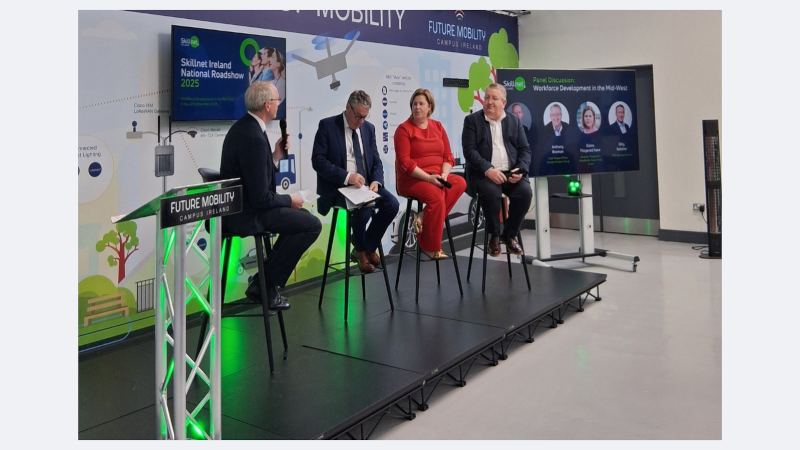
TechHeads at Skillnet Ireland’s Roadshow: Driving Innovation, AI, and Green Skills
TechHeads at Skillnet Ireland’s Roadshow: Driving Innovation, AI, and Green Skills On 21st November 2025, [...]

HR Guide to Ireland’s Auto-Enrolment Pension Scheme
HR Guide to Ireland’s Auto-Enrolment Pension Scheme “Retirement: It’s nice to get out of the [...]

How the EU Pay Transparency Directive Impacts the Tech Sector
How the EU Pay Transparency Directive Impacts the Tech Sector The EU Pay Transparency Directive [...]
Use AI in Your Job Search Without Feeling Robotic
Use AI in Your Job Search Without Feeling Robotic As a tech recruitment team, we’re [...]
Tech & IT Hiring Trends in Ireland 2025
Tech & Hiring Trends in Ireland 2025 Ireland’s tech and IT job market continues to [...]
Remote and Hybrid Jobs in Ireland: What Candidates Need to Know
Remote and Hybrid Jobs in Ireland: What Candidates Need to Know Flexible working isn’t just [...]
Top 5 Mistakes Tech Job Seekers Make
Top 5 Mistakes Tech Job Seekers Make You’re talented, experienced, and great at what [...]

Budget 2026: Implications for Ireland’s Tech Industry
Budget 2026: Implications for Ireland’s Tech Industry Budget 2026 is setting the stage for Ireland’s [...]